choosing, pricing and maintaining pedal-assist bicycles for short flat trips, including coastal and neighbourhood riding
Groceries, the beach, a school run under four miles. What an assisted cruiser actually replaces
A plain account of which short errands a pedal-assist cruiser genuinely takes over from a car, which ones it never will, and what the switch costs before you compare models.
The three-mile threshold
Trips under about three miles are where a car feels wasteful and an unassisted bike feels like a chore. Assist collapses that gap and turns the trip into a default rather than a decision.
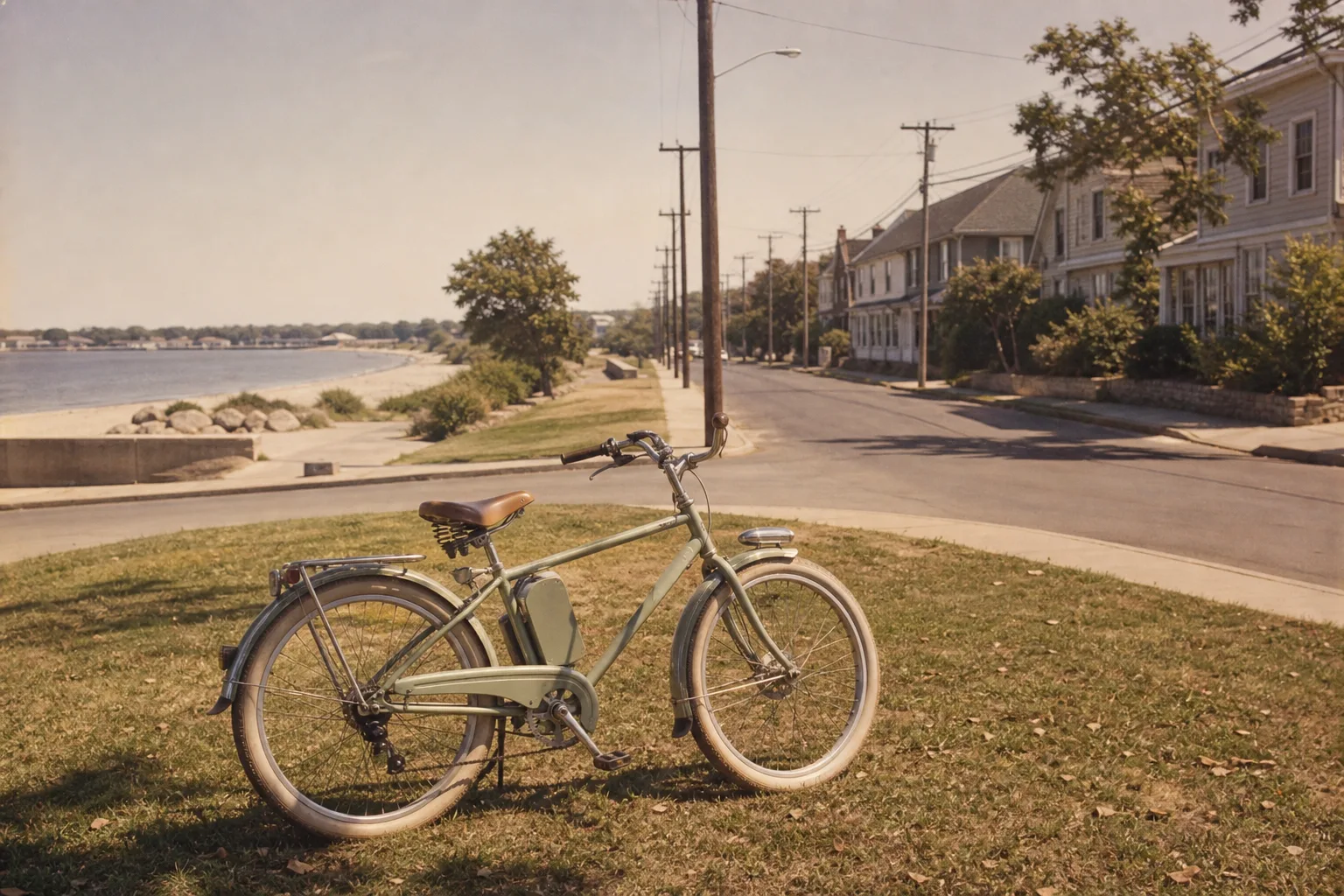
- 01
Grocery capacity in practice
A rear rack with panniers or a bolted milk crate carries a three-day shop comfortably, not a ten-day one. Plan for more frequent, smaller trips rather than a single weekly haul.
- 02
Beach parking arithmetic
At a busy coastal access point in summer, the circling and the walk from the overflow lot often take longer than the ride itself. Bike access sidesteps the worst part of the trip entirely.
- 03
School runs and route quality
Runs under four miles work well with a properly rated rear seat or a child riding alongside. The limiting factor is almost always the road, not the distance.
The three-mile errand is where the argument about assisted bikes is actually settled, because it is short enough that a car feels wasteful and long enough that an unassisted bike, on a hot day, with a load, starts to feel like a decision you have to psych yourself up for. Assist removes that hesitation. It does not remove the rain, the lock, the parking hunt at the far end, or the fact that a gallon of milk still weighs eight pounds. Knowing which of those the motor solves, and which it leaves entirely alone, is the difference between a bike that gets ridden four times a week and one that gets ridden in April and then sits.
What the motor actually changes on a flat three miles
On flat ground, assist does not make you faster in any way that matters legally or practically, since a Class 1 or Class 2 system stops helping around twenty miles an hour and most people on a swept-back frame with a basket are cruising well under that anyway. What it changes is effort variance. Headwind off the water, a rear rack with two paper sacks in it, a slight rise over a bridge approach, a start from a dead stop at a light: those are the moments that make an unassisted errand feel like exercise you did not schedule, and assist flattens all of them. You arrive in the same clothes you left in. That single fact converts more car trips than range or top speed ever will.
The second change is psychological and worth naming plainly. When the effort cost of a trip drops below some threshold, you stop batching errands and start taking them one at a time, which is how a bike ends up doing five short runs a week instead of one big Saturday shop. That pattern is what makes the numbers work, because the fixed costs of owning the bike get spread across many small trips rather than a few heroic ones.
The trips it genuinely takes over
Groceries under about four miles, with a rear rack and either panniers or a milk crate bolted down, work reliably once you accept that you are shopping for three days rather than ten. Beach access is the strongest case of all, because the parking situation at any decent coastal access point in July is worse than the ride, and a bike rolls past the line of cars circling the lot. School runs inside three or four miles work if the child is either on a rear seat rated for their weight or riding their own bike alongside, and if the route has something better than a painted stripe on a forty-mile-an-hour road. Library, hardware store for small parts, coffee, the post office, a friend's house across the neighborhood: all of these are the bike's natural territory, and the frame geometry on a heavy upright electric beach cruiser is built for exactly that upright, low-speed, stop-and-start pattern rather than for covering distance.
What these trips share is that they are short, flat, familiar, and end somewhere you can lock to something solid. Take away any one of those, particularly the last, and the calculation gets shakier fast.
The trips it does not replace
Anything with a cargo dimension problem stays in the car: a case of water, a folding table, forty pounds of soil, a dog. Anything where you are the designated transporter of another adult's belongings stays in the car. Trips over roughly six or seven miles each way stop being errands and start being rides, which is fine but is not the same category, and trips that end at a strip mall with nothing but landscaping to lock to are a genuine problem no motor fixes. Freezing rain, ice, and the two weeks a year when it is simply too hot to be outdoors at three in the afternoon also stay in the car. Counting these honestly before you buy is what keeps expectations aligned, and most people find the honest number is somewhere between a third and two-thirds of their short trips, which is still a lot.
What the decision costs beyond the sticker
The purchase price is the visible number, and it is not the whole one. Budget for a rack and bags, a lock heavy enough that you are not nervous leaving it, a helmet, lights, and a floor pump, because a twenty-five-pound bike and a sixty-five-pound bike do not have the same consequences when a tire goes soft. Budget for storage: these bikes are too heavy to carry up a flight of stairs comfortably and too valuable to leave in an unlocked shed. Budget for a charging spot near an outlet where you will actually plug it in. The Consumer Product Safety Commission oversees safety standards for bicycles and the lithium batteries that power them, and buying to a recognized certification is the cheapest risk reduction available.
There is also a time cost that runs the other way. Tire pressure every week or two, a chain wipe once a month, brake pads more often than on a lighter bike because there is more mass to stop. Set against that, you stop paying for parking, you stop idling, and short car trips are the ones that punish an engine most.
Decide the trip list first. The model comparison is much easier once you know what the bike is for.
Bulky or heavy loads, another adult's belongings, dogs, and anything ending at a lot with nothing solid to lock to. Ice and extreme heat belong on that list too.